A strong startup pitch is not about saying everything. It is about making the opportunity clear enough that people want to continue the conversation.
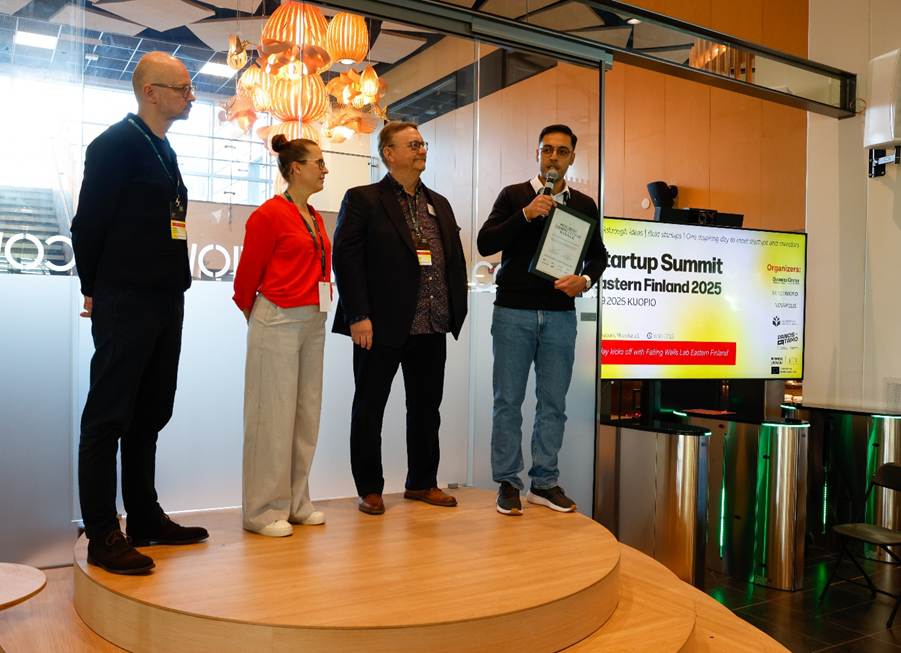
At Startup Summit Kuopio 2026, selected startup teams will pitch in a short format. That means clarity, focus and credibility matter more than long explanations or polished buzzwords.
Clarity is the real advantage
The best pitches make the audience understand the problem, the solution, the market and the team quickly. If people are confused after three minutes, the pitch has failed, even if the idea is good.
Apply to pitchStart with a problem people can understand
Every strong pitch starts with a real problem. Not a vague trend, not a general market observation, and not a long introduction to the technology. The audience needs to understand who has the problem, why it matters and why current alternatives are not good enough.
The problem should be concrete. If the listener cannot picture the customer and the pain, the rest of the pitch becomes harder to evaluate.
- Who has the problem?
- How often does the problem happen?
- How expensive, slow, risky or frustrating is it?
- How is the problem currently solved?
- Why are current solutions not enough?
Explain your solution without overcomplicating it
Once the problem is clear, the solution should be easy to understand. This is especially important for technical, research-based or deep tech startups. The audience may include investors, ecosystem partners, students, founders and business professionals from different fields.
A simple explanation does not make the solution less serious. It makes it easier to evaluate.
Show why the opportunity is worth building
A startup pitch is not only an idea presentation. It should show that the idea could become a real business. That means explaining the market, the customer and the commercial logic.
At an early stage, you do not need perfect numbers. But you do need to show that you understand where the first business opportunity is.
- Who is the first realistic customer?
- Why would they pay for this?
- How big could the opportunity become?
- What market change makes this relevant now?
- How could the company scale over time?
Make the team credible
For early-stage startups, the team is often just as important as the idea. The jury wants to understand why this team can solve this problem and move the company forward.
Credibility can come from different sources: technical expertise, customer insight, research background, industry experience, sales ability, previous execution or a strong founder-market fit.
Traction matters, but it can mean different things
Many early-stage startups do not yet have revenue. That is normal. But a strong pitch should still show progress. The question is: what have you learned, validated or achieved so far?
Traction can be commercial, technical, research-based or customer-driven. The important thing is that it shows movement.
- Customer interviews or user research.
- Prototype, demo or proof of concept.
- Letters of intent, pilots or early customer interest.
- Research results, patents or technical validation.
- Revenue, users, partnerships or signed customers.
- Accelerator, grant, competition or ecosystem recognition.
A good pitch has a clear ask
The end of the pitch should not just fade out. Tell the audience what you are looking for next. This helps investors, partners and ecosystem actors understand how they could help.
The ask does not always have to be funding. Depending on the stage, it could be customers, pilots, technical partners, advisors, research collaboration or market access.
Common pitch mistakes
Most weak pitches do not fail because the idea is bad. They fail because the explanation is unclear, too technical, too broad or too disconnected from the customer.
- Starting with the product before explaining the problem.
- Using too much jargon or technical detail.
- Trying to cover too many customer segments at once.
- Claiming a huge market without explaining a realistic entry point.
- Spending too much time on background and too little on the business.
- Ending without a clear next step.
A simple pitch structure
If you are preparing a short pitch, use a simple structure first. You can make it more personal and memorable later, but the foundation should be clear.
What the jury wants to understand
The jury does not need to know every detail of the company. In a short pitch, the jury needs to understand whether the startup is solving a meaningful problem, whether the solution is credible and whether the team has a realistic path forward.
Apply to pitch at Startup Summit Kuopio 2026
Startup Summit Kuopio 2026 is looking for ambitious early-stage startups to pitch on stage in front of founders, investors, experts, partners and the Eastern Finland startup ecosystem.
Selected startups receive stage visibility, expert feedback, free entry, pitch preparation and relevant ecosystem connections.
Ready to pitch your startup?
Apply by 1 July 2026. Selected startups will receive more detailed pitch instructions before the event.
Apply to pitch at Startup Summit Kuopio 2026